


Doing nothing differently but eating what was always done before and exercising more, yet your scale continues to creep higher? This scenario may sound all too familiar and is certainly no cause for alarm; weight gain during perimenopause is one of the primary complaints women raise with their doctors, often having nothing to do with willpower alone.
It’s Not Just About Calories In, Calories Out
For most of your adult life, weight management largely came down to a fairly predictable equation: eat less or move more, and the scale responds. Perimenopause changes that equation, because it changes your underlying biology, not just your habits.
What’s Actually Driving the Weight Gain
Decreasing and fluctuating estrogen: Estrogen plays an integral part in how your body regulates metabolism and stores fat. When estrogen levels fluctuate erratically and eventually decline, fat storage tends to shift from hips and thighs towards the abdomen despite your total body weight remaining unchanged.
Muscle loss: Beginning in your 30s and accelerating through perimenopause, most people gradually experience muscle mass decline. Since muscle burns more calories at rest than fat does, as muscle mass drops, so does your resting metabolic rate, meaning that over time you consume fewer calories despite doing the same things you always did before.
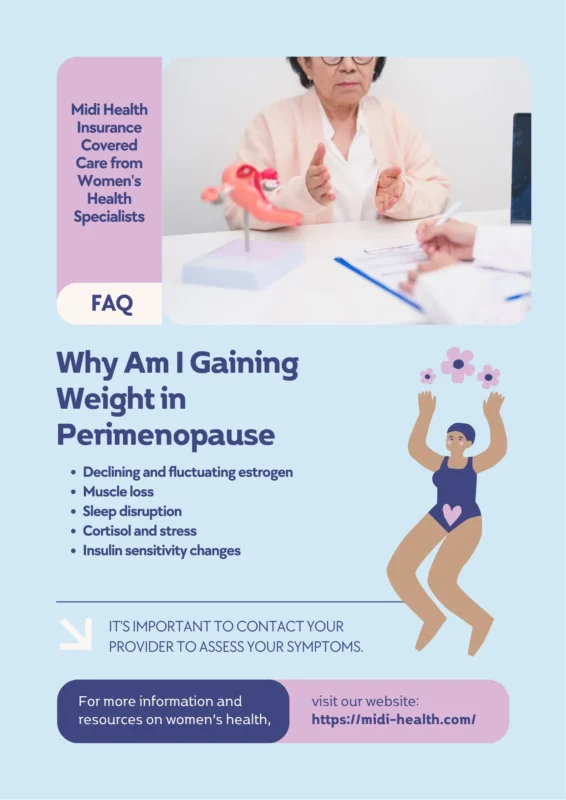
Sleep Disturbance: Night sweats and hormone-driven insomnia are extremely prevalent during perimenopause, leading to poorer quality sleep that directly correlates with increased hunger hormones (ghrelin) and decreased satiety hormones (leptin), thus making you even hungrier on an otherwise restful evening. Less restful sleep can result in you feeling hungry each morning when awake compared with when restful sleep allowed the previous night.
Cortisol and Stress: Perimenopause often coincides with a stressful stretch in one’s life: careers, caring for aging parents, or raising teenagers can increase cortisol production — an alarming stress hormone linked to increased abdominal fat storage.
Insulin Sensitivity Changes: Recent research suggests estrogen decline can make cells slightly less responsive to insulin, possibly making fat storage easier but harder for energy use.
What Actually Helps
Prioritize strength training over cardio: With muscle atrophy being one of the leading factors of metabolic rate reduction, strength training two or three times each week may provide much-needed protection of metabolic rates – something cardio cannot.
Increase protein consumption: An increase in protein consumption helps support muscle maintenance while simultaneously aiding satiety, helping offset hormone-driven hunger changes.
Rethink how sleep should be prioritized: Treat night sweats or insomnia through lifestyle adjustments or medical means; this could have significant ripple-through effects for managing appetite and weight.
Talk with Your Provider About Hormone-Related Options: Hormone therapy or medical treatments might be able to address hormonal shifts that cause weight changes in some women; while this approach might not suit everyone, discussing it with your healthcare provider before concluding diet and exercise alone are the solution may help bring relief.
Examine what “dieting” really means right now: Restricting calories too severely may increase stress hormones and hasten muscle loss during perimenopause; for best results, an approach consisting of adequate protein, strength training sessions regularly, and stress management is preferable over extreme restriction.
When to See a Doctor

It’s worth booking a visit if you’re experiencing:
- Rapid or significant weight gain over a short period
- Weight gain paired with other new symptoms (fatigue, hair thinning, cold intolerance — which could point to thyroid issues rather than perimenopause alone)
- Weight changes that feel out of your control despite consistent effort
A clinician can help rule out other causes (like thyroid dysfunction) and talk through whether hormone-related treatment options make sense for you.
FAQ: Perimenopause Weight Gain
Where does perimenopause weight gain typically show up first? Most women notice it around the midsection first, even before total weight changes significantly, due to the shift in fat storage patterns driven by declining estrogen.
Does hormone therapy help with perimenopause weight gain? Hormone therapy is primarily prescribed for symptom relief rather than weight loss specifically, but by improving sleep and other symptoms, some women find it easier to manage weight as a secondary benefit. Results vary, and it’s not appropriate for everyone.
Is it harder to lose weight during perimenopause than before? For many women, yes — due to muscle loss, metabolic changes, and insulin sensitivity shifts. This doesn’t mean weight loss is impossible, but it often requires a different approach than what worked in your 20s or 30s.
Can stress alone cause perimenopause weight gain? Stress is a contributing factor, particularly through cortisol’s effect on abdominal fat storage, but it typically works alongside hormonal changes rather than as a standalone cause.
This article is for informational purposes and isn’t a substitute for personalized medical advice. Talk to a licensed healthcare provider about your specific symptoms and health history.


