

If you’re dealing with hot flashes, night sweats, sleep problems, vaginal dryness, or other menopause symptoms, your healthcare provider may discuss hormone replacement therapy (HRT) with you. But before starting treatment, there’s another practical question: Does insurance cover HRT?
The short answer is: often, yes, but it depends on your health insurance plan and the treatment you need.
What Is Hormone Replacement Therapy?
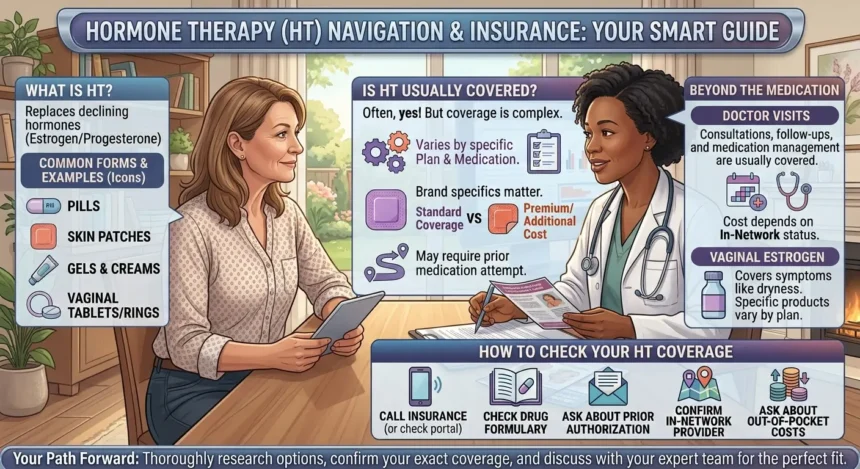
Hormone replacement therapy is used to replace hormones that naturally decline during menopause. Depending on your symptoms and medical history, treatment may include estrogen alone or a combination of estrogen and progesterone.
HRT can come in several forms, including:
- Pills
- Skin patches
- Gels
- Creams
- Vaginal tablets or rings
Your healthcare provider will recommend the form and dose based on your symptoms, health history, and individual needs.
Does Insurance Usually Cover HRT?
Many health insurance plans provide some level of coverage for prescription hormone therapy. However, coverage isn’t identical from one plan to another.
Your plan may cover certain HRT medications but not others. For example, it may cover one brand of estrogen patch while requiring you to pay more for another. Some plans may also require you to try a particular medication before approving a different one.
Even when HRT is covered, you may still have to pay a copay, deductible, or coinsurance.
That’s why it’s important to look at your specific benefits rather than assuming that every type of HRT will cost the same.
Does Insurance Cover the Doctor’s Visit?
In many cases, insurance can also cover visits related to menopause care and hormone therapy. This may include an initial consultation, follow-up appointments, and medication management.
Your costs can depend on whether the healthcare provider is in-network with your insurance plan. An out-of-network visit may leave you with a larger bill, even if the treatment itself is covered.
Before making an appointment, it’s reasonable to ask the office whether they accept your insurance and what your expected out-of-pocket costs might be.
What About Vaginal Estrogen?
Vaginal estrogen is commonly prescribed for symptoms such as vaginal dryness, discomfort during sex, and some urinary symptoms associated with menopause.
Coverage for vaginal estrogen can vary. Some insurance plans cover certain products while others may have restrictions or require a specific prescription.
If your first-choice treatment isn’t covered, don’t assume you have no options. Ask your healthcare provider whether another form or medication would be appropriate for you.
How Can You Check Your HRT Coverage?
A quick insurance check can save you from an unexpected bill.
You can:
- Call the number on your insurance card and ask whether your prescribed HRT is covered.
- Check your insurance company’s drug formulary to see which medications are included.
- Ask whether prior authorization is required.
- Confirm whether your healthcare provider is in-network.
- Ask about your deductible, copay, and coinsurance.
If you’re prescribed a medication that isn’t covered, your healthcare provider may be able to discuss other suitable options.
What If Your Insurance Doesn’t Cover HRT?
Don’t give up after hearing “not covered.” Insurance rules can be confusing, and sometimes the issue is the specific medication rather than HRT as a whole.
Talk with your healthcare provider about alternatives. Depending on your situation, there may be another medication, formulation, or treatment option that your insurance does cover.
It’s also important not to choose or change hormone therapy based only on price. HRT isn’t appropriate for everyone, and the safest option depends on your medical history and personal risk factors.
The Bottom Line
Insurance often covers hormone replacement therapy, but coverage varies by plan, medication, and provider. Your out-of-pocket cost may also depend on your deductible, copay, or coinsurance.
If you’re considering HRT, start by talking with a qualified healthcare professional about whether it’s appropriate for you. Then check your insurance benefits so you know what your treatment may cost.
Menopause care shouldn’t feel like a guessing game. A little preparation before starting treatment can make the process much easier.
This article is for general educational purposes and isn’t a substitute for personalized medical advice. Talk with your healthcare provider before starting, stopping, or changing hormone therapy.