

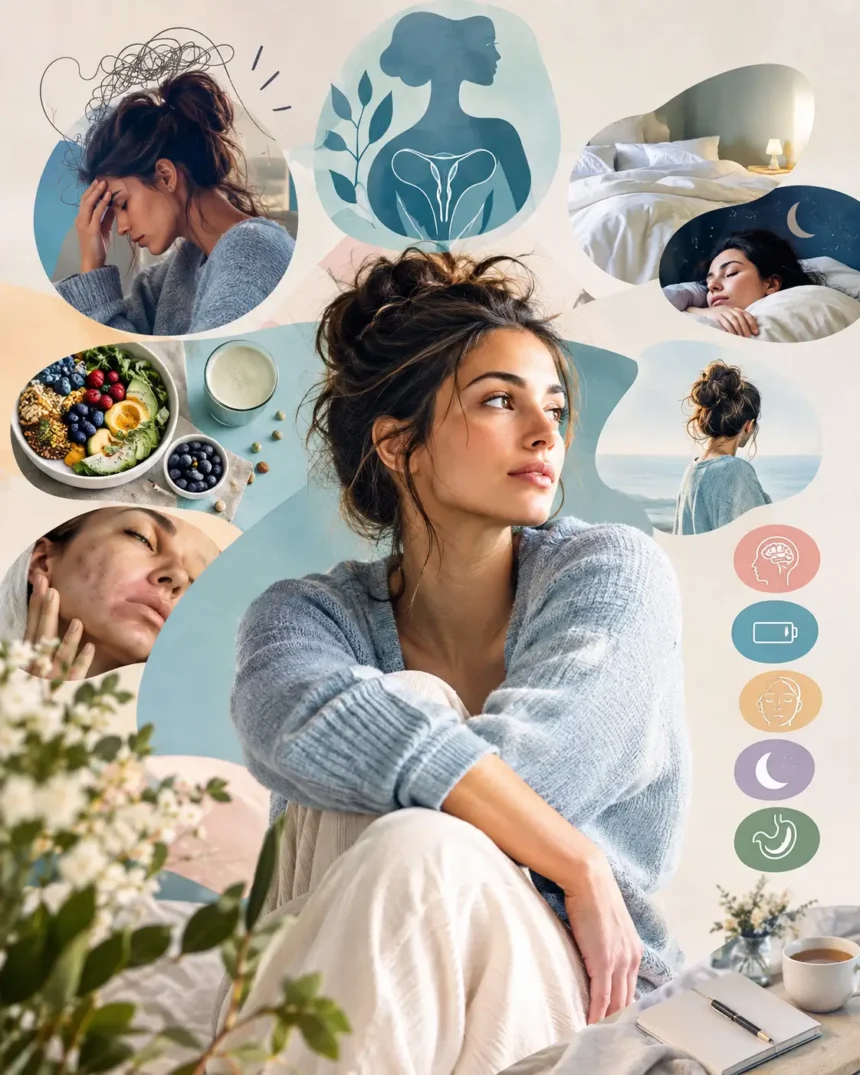
There are days when you don’t feel like yourself.
Small things feel heavy. Your mood shifts without warning. You react, overthink, withdraw, and then wonder why you are feeling this way.
Sometimes, you may even blame yourself for not handling things better.
But when you look closer, there may be more going on than you realize.
PCOS Can Affect More Than Your Periods
PCOS is often talked about in terms of irregular periods, weight changes, acne, or fertility.
But for some women, it can also come with fatigue, cravings, sleep problems, and changes in mood. These experiences can be frustrating, especially when nobody can see what you are dealing with.
And no, it does not mean you are simply being “too emotional.”
When Your Mood Feels Different
There may be days when you feel completely fine, followed by days when everything suddenly feels harder.
You may become more sensitive, frustrated, anxious, or overwhelmed. You may find yourself overthinking things that normally would not bother you.
Mood changes can have many causes, and they should not automatically be blamed on PCOS. But if these changes happen alongside other PCOS symptoms, they are worth mentioning to your healthcare provider.
The Fatigue No One Sees
Being tired is one thing.
Feeling like you are running on empty even after resting is another.
Fatigue can be connected with many different factors, including sleep, stress, nutrition, insulin resistance, anemia, thyroid problems, and other health conditions. If you are constantly exhausted, you deserve more than being told to simply push through it.
Cravings Can Feel Hard to Control
Sometimes cravings are not about a lack of willpower.
Changes in appetite and blood sugar regulation can make managing hunger and cravings more difficult for some women with PCOS, particularly when insulin resistance is present.
That does not mean every craving is caused by PCOS. It simply means your relationship with food is not always as simple as “just have more discipline.”
You Are Not Failing
This is something I want women with PCOS to remember.
Your body is not necessarily working against you. You may simply be dealing with a condition that affects several areas of your health at once.
Instead of blaming yourself for every symptom, try to understand what your body may need.
The Right Support Can Help
PCOS cannot be fixed by one perfect meal or one workout.
A supportive approach may include nutritious food, regular physical activity, good sleep, stress management, and medical treatment when appropriate. The right plan will look different for every woman.
You do not need to punish your body into feeling better. You need support that makes sense for your health.
You Are Not the Problem
If you have days when you do not feel like yourself, you are not alone.
Your feelings are real. Your symptoms are worth discussing. And struggling with your health does not make you weak or difficult.
Your body is not your enemy. It is asking to be understood. 🤍
The Bottom Line
PCOS is more than periods and weight. It can affect different parts of your health, and the emotional side of living with PCOS is often overlooked.
You do not have to blame yourself for every difficult day.
Listen to your body, ask questions, and give yourself the support you deserve.
Medical Disclaimer
This article is for general education and is not medical advice. PCOS affects women differently, and mood changes, fatigue, and cravings can have many possible causes. These symptoms do not automatically mean you have PCOS. Speak with a qualified healthcare professional for an appropriate evaluation and personalized care.
References
- International Evidence-based Guideline for the Assessment and Management of Polycystic Ovary Syndrome. 2023 International Evidence-based Guideline for the Assessment and Management of Polycystic Ovary Syndrome.
- American College of Obstetricians and Gynecologists. Polycystic Ovary Syndrome.
- National Institute of Child Health and Human Development. Polycystic Ovary Syndrome.
- National Institute of Mental Health. Depression and Mental Health.