

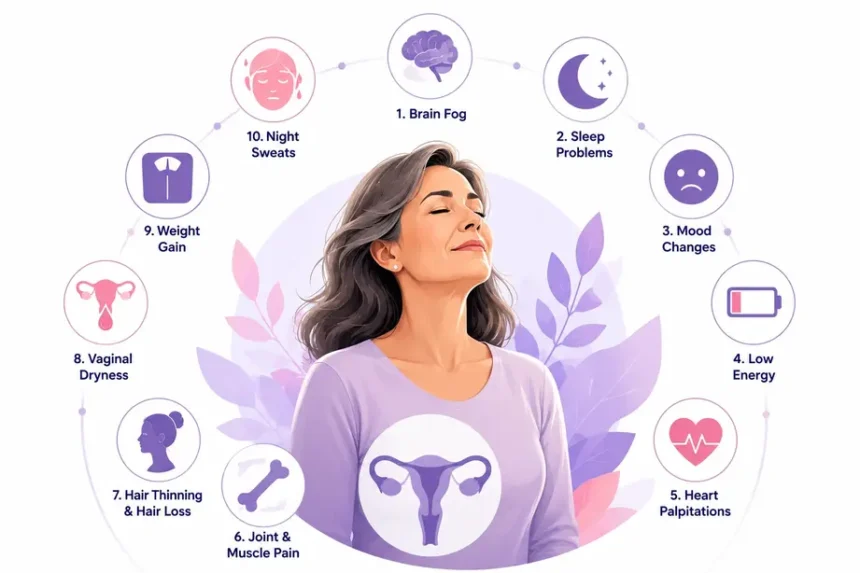
Menopause is a natural stage of life that marks the end of menstrual periods. It is officially diagnosed after 12 consecutive months without a period and usually occurs between the ages of 45–55.
Most people know about hot flashes, but menopause can cause many other symptoms that often go unnoticed. Here’s a closer look at what you might not expect, why it happens, and how you can manage it.
Lesser-Known Menopause Symptoms
These symptoms are often mistaken for stress or aging, but fluctuating hormone levels can play a contributing role.
1. Burning Mouth
A burning or tingling sensation on the tongue, gums, or roof of the mouth can show up during menopause. It’s linked to dropping estrogen levels, which affect saliva production and how nerves in the mouth respond.
2. Frozen Shoulder
Stiffness and pain that limit shoulder movement are more common in women going through menopause. Estrogen plays a role in joint and connective tissue health, and lower levels may contribute to inflammation and reduced mobility.
3. Heart Palpitations
A racing or fluttering heartbeat can feel alarming, but it’s a recognized menopause symptom. Hormonal shifts affect the nervous system’s control over heart rate, which can make palpitations more noticeable, especially at night.
4. Ringing in the Ears
Tinnitus, or a persistent ringing or buzzing sound, has been linked to hormonal changes during menopause. It may also be connected to disrupted sleep and increased stress during this stage.
5. Urinary Urgency
A sudden or frequent need to urinate can happen as declining estrogen thins the tissues of the bladder and urethra. This can also increase the risk of urinary tract infections.
6. Dry Eyes
Hormonal changes reduce tear production, leaving eyes feeling dry, gritty, or irritated. This symptom is often overlooked but can affect daily comfort significantly.
7. Tingling in the Hands and Feet
Some people notice pins-and-needles sensations or numbness in their extremities. This is thought to be related to how estrogen affects the nervous system.
8. Brain Fog
Trouble concentrating, forgetfulness, and a general mental haze are common during menopause. Sleep disruption and hormonal fluctuations both contribute to this frustrating symptom.
9. Sudden Body Odor Changes
Hormonal shifts can affect sweat gland activity, leading to changes in body odor that feel unfamiliar. This is a normal, if surprising, part of the transition.
10. Feeling Overwhelmed by Everyday Stress
Small stressors can start to feel much bigger during menopause. Fluctuating hormones affect mood regulation, making emotional resilience harder to maintain some days.
Why These Symptoms Happen
Estrogen and progesterone don’t just regulate periods, they influence the brain, skin, joints, bladder, and nervous system too. As hormone levels fluctuate and decline, the effects can show up in places you’d never expect, which is why so many of these symptoms get mistaken for something else entirely.
Managing Menopause Symptoms Naturally
The good news? With the right approach, many menopause symptoms can be managed so you feel your best through this transition.
- Nutrition – A balanced diet rich in calcium, vitamin D, and phytoestrogens (like flaxseed and soy) can help support hormone balance and bone health.
- Regular exercise – Movement, especially strength training and weight-bearing activity, helps protect joints, mood, and metabolism.
- Quality sleep – Prioritizing a consistent sleep routine can ease brain fog, palpitations, and stress levels.
- Stress management – Practices like deep breathing, journaling, or gentle yoga can help regulate mood swings and everyday overwhelm.
- Medical guidance – A doctor can help rule out other causes and discuss options like hormone therapy if symptoms are significantly affecting your quality of life.
Final Thoughts
Menopause looks different for everyone, and these symptoms are far more common than most people realize. Recognizing them for what they are, rather than dismissing them as “just stress” or “just aging”, is the first step toward managing them well.
Which of these symptoms surprised you the most? Save this post for later or share it with someone who might need it.