

If menopause symptoms are affecting your sleep, mood, energy, or day-to-day life, you may be wondering: Will my insurance cover treatment?
In many cases, it can. But coverage depends on your insurance plan, the treatment you need, and the healthcare provider you see.
What Menopause Treatment Can Insurance Cover?
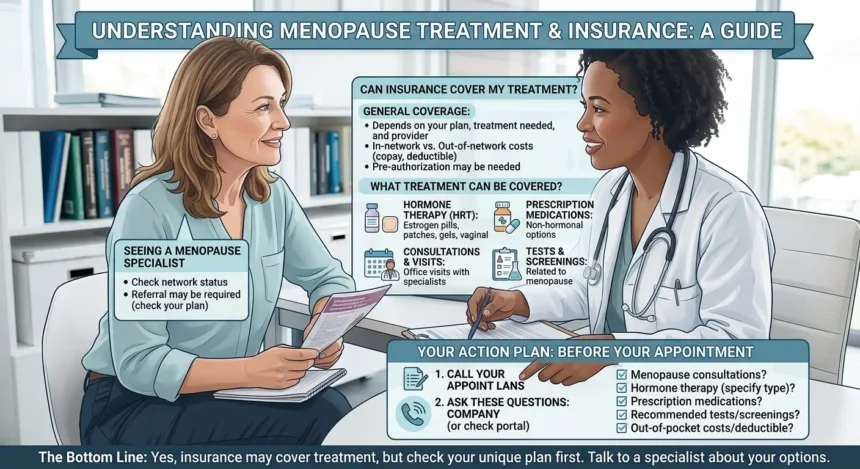
Depending on your plan, insurance may help pay for menopause-related visits, prescription medications, hormone therapy, and certain tests or treatments.
Hormone therapy, for example, may be covered when it’s prescribed to manage symptoms such as hot flashes and night sweats. Coverage can differ between estrogen pills, patches, gels, vaginal estrogen, and other forms of treatment.
Your out-of-pocket cost can also depend on your deductible, copay, coinsurance, and whether your provider is in your insurance network.
Does Insurance Cover a Menopause Specialist?
It may. If you’re looking for specialized menopause care, check whether the provider is in your plan’s network. Some insurance plans may also require a referral before you see a specialist.
And remember, you don’t have to wait until symptoms become overwhelming before seeking help. Menopause can affect much more than your periods, and treatment should be based on your symptoms, health history, and personal needs.
How Can You Check Your Coverage?
Before your appointment or starting a new treatment, call your insurance company or check your member portal. Ask whether your plan covers:
- Menopause consultations
- Hormone therapy
- Prescription medications
- Telehealth visits
- Recommended tests or screenings
It’s also worth asking about your deductible and expected out-of-pocket costs.
The Bottom Line
Yes, insurance may cover menopause treatment, but there isn’t one rule for every plan. If menopause symptoms are getting in the way of your life, talk with a qualified healthcare professional about your options and check your insurance benefits before beginning treatment.